
Originally Posted On: https://www.safetypluswholesale.com/blogs/news/how-to-avoid-overpaying-on-fire-extinguisher-price-when-stocking-supply-company-inventory
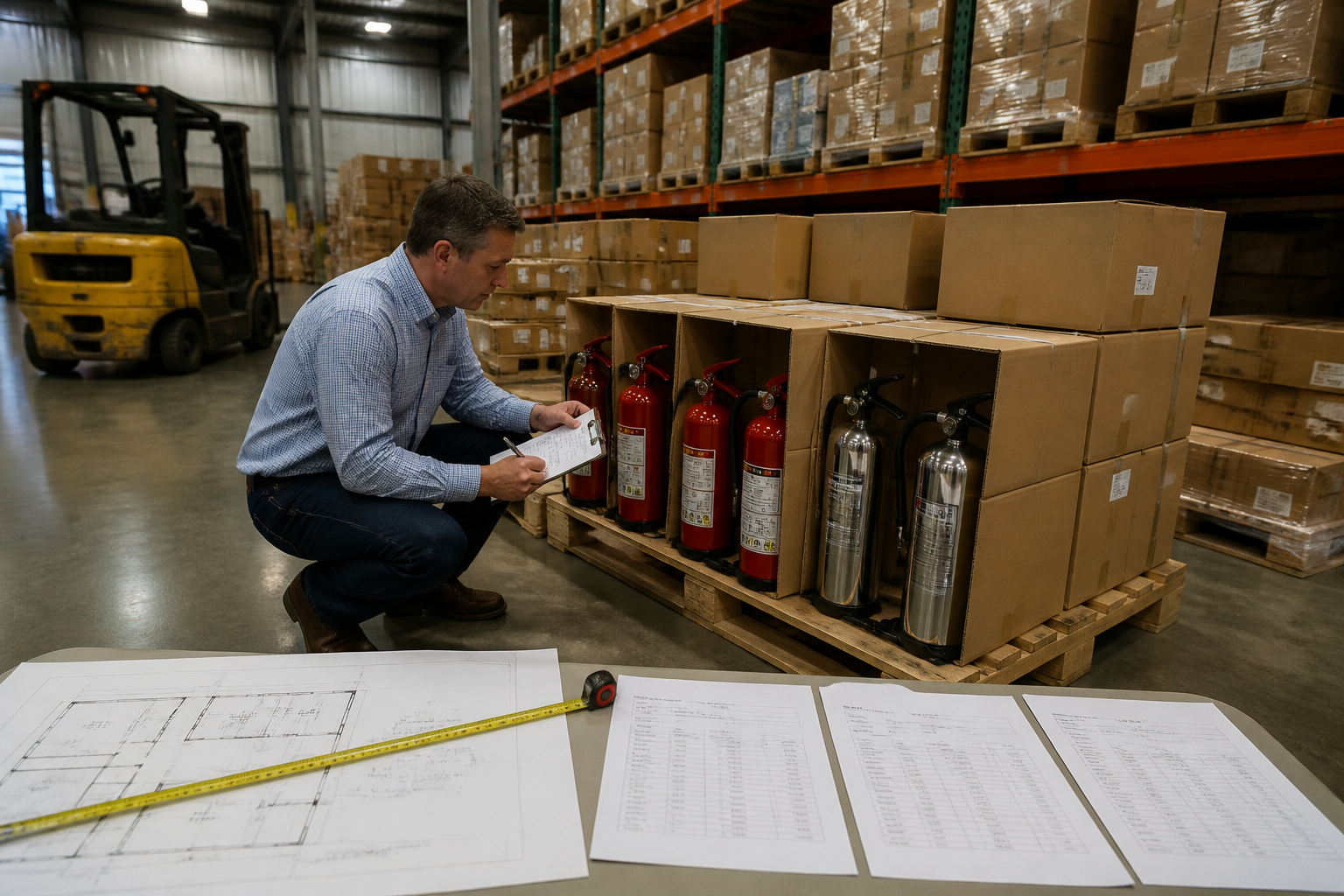
What You'll Need Before You Start
-
Current inventory count — total extinguishers on hand, broken out by weight class and agent type (ABC, BC, CO2, water, K Class wet chemical)
-
Facility square footage per site — needed to run NFPA 10 coverage math before you request quotes
-
Hazard class list — kitchens, mechanical rooms, fleet vehicles, and office areas often need different classes on the same site
-
Written fire extinguisher price list from at least two distributors — broken out by unit, bracket, and cabinet cost, not a single bundled number
-
Bracket and cabinet specs — pull these from your Division 10 spec sheet, not from a generic retail listing
-
Recharge and hydrostatic testing cost estimates — ask for a 6-year cost projection, not just the sticker price
-
Certification tag requirements — confirm whether tagging is included in the quote or billed separately
-
Delivery timeline in writing — target 2-3 day shipping with tracking for bulk orders
-
Basic knowledge of NFPA 10 coverage ratios — no certification required, but you'll need to read and apply the ratio tables yourself
-
Time estimate: 3-5 business days to gather quotes, compare, and lock in a purchase order for a multi-site order
Fifty extinguishers, three bracket types, one purchase order — and a fire marshal who's going to check every tag. That's the reality for procurement teams stocking a supply company's inventory, and it's exactly where fire extinguisher price comparisons go sideways. Pull a single-unit number off a retail shelf and try to scale it across a bulk order, and the math falls apart fast.
Here's what most people miss: a wholesale quote isn't a bigger version of a retail price tag. It's a different animal entirely, built on unit count, hazard class, bracket bundles, and recharge cycles that never show up on a single-extinguisher sticker. Get the comparison wrong and you're either overpaying by a wide margin or under-ordering for the square footage you're actually covering. Get it right, and you've got a repeatable process that holds up at every reorder — not just this one.
What You'll Achieve and What You Need Before You Start
Picture a supply company rep pulling quotes for 40 new construction sites, comparing three vendors, and ending up with mismatched hazard coverage because nobody checked NFPA 10 requirements first. That's how budgets get torn apart before the first pallet ships.
Before you request a single quote, pull three things together: your current inventory count, square footage per site — the hazard classes you actually need covered — ABC, BC, CO2, water, K Class, wet chemical. Skip this step, and you'll overbuy one class and run short on another.
Here's the thing about fire extinguisher price comparisons floating around online: they're built on single-unit retail math, not bulk procurement logic. Big-box pricing doesn't reflect wholesale unit costs, freight consolidation, or code-driven replacement cycles.
Don't forget storage. If units sit outdoors or in unconditioned spaces, budget for an outdoor fire extinguisher box per unit, not per site.
Step 1: Pull a Fire Extinguisher Price List and Normalize It by Unit Type
Here's the blunt truth: most supply companies overpay because they never normalize their fire extinguisher price list by unit size — class before comparing quotes. Fix that first, and half your budget leaks disappear.
Sub-step: Separate 10 lb Commercial Units from 2.5-5 lb Retail Units
A 10 lb ABC fire extinguisher tagged for commercial occupancy costs more per unit than a Walmart fire extinguisher 5lb model — compare like against like, or your numbers lie to you. Don't lump a water fire extinguisher in with dry chemical units either; agent type changes cost per pound.
Sub-step: Check Amerex Fire Extinguisher Price List Against Distributor Quotes
Amerex fire extinguisher distributors often quote lower per-unit rates at 24+ unit tiers than Amerex fire extinguisher Amazon or Amerex fire extinguisher Home Depot listings.
Common Mistake: Pricing Fire Extinguisher 10 lbs Price Without Factoring Bracket and Cabinet Costs
Brackets, wall hooks, and a fire extinguisher stand aren't optional line items on a Division 10 spec — build them into landed cost from day one.
Step 2: Match Extinguisher Class to Code Before You Ever Compare Fire Extinguisher Price
Are you comparing units before you even know how many you need? That's backward. NFPA 10 sets coverage ratios by hazard class and square footage, and those ratios — not a spreadsheet of vendor quotes — should drive your order count.
Sub-step: Confirm NFPA 10 Coverage Ratios for Your Occupancy Type
Light hazard occupancies get one 2A unit per 3,000 square feet; higher hazard spaces need more coverage per square foot. Get this wrong — you'll either fail inspection or pay for extinguishers you didn't need. Pull your floor plans first, then price second.
Sub-step: Rule Out Wrong-Class Units Like ABC Fire Extinguisher Walmart Models for Commercial Kitchens
Grease-heavy kitchens need K Class wet chemical, full stop. Ordering equipment for a restaurant kitchen fire extinguisher setup means skipping the ABC shelf model entirely. And warehouse buyers make similar errors — review common mistakes buyers make when choosing a fire extinguisher for warehouse safety before placing a bulk order.
Step 3: Request Bulk Quotes and Run a Real Comparison, Not a Guess
Here's a number that surprises most buyers: nearly 40% of bulk fire safety orders get re-quoted after delivery because hidden fees weren't caught upfront. Don't let that be you. Ask every distributor for a written fire extinguisher price list broken out by weight class, agent type, and bracket or cabinet bundle.
Build a simple comparison sheet — unit price, minimum order quantity, shipping timeline, and recharge cost per unit down the line. Facilities stocking a fire extinguisher for restaurant program often skip this step, then get stuck with mismatched agent types later.
Sub-step: Factor in Amerex Fire Extinguisher Recharging Costs Over a 6-Year Cycle
Recharge and hydrostatic testing costs stack up fast. A slightly higher upfront unit price paired with cheaper recharge service usually wins over six years.
Sub-step: Confirm Certification Tag Costs Are Included, Not Added Later
Some quotes quietly leave out certification tagging.
Ask directly — don't let it show up as a surprise line item after delivery.
Step 4: Lock In Shipping Terms and Delivery Timelines Before You Sign
Here's a myth worth killing: a low fire extinguisher price means nothing if your stock sits on a loading dock for three weeks. Vague "lead time varies" language is how vendors hide slow fulfillment behind a good quote. Get shipping terms in writing — 2-3 day dispatch with tracking should be the floor, not a bonus.
For multi-site rollouts, timing matters as much as unit count. Don't let a BC fire extinguisher order arrive weeks before the mounting hardware does. Stagger deliveries so cabinets, brackets, and the fire extinguisher stands collection land alongside the units they're built to hold. An empty stand sitting unused for a month is a compliance gap waiting for an inspector to notice.
Before signing anything, confirm the vendor's unit counts actually match the NFPA 10 coverage plan from Step 2. A supplier who can't reconcile quantities against your floor plan probably can't hit their own delivery promises either.
Common Mistakes to Avoid When Comparing Fire Extinguisher Prices
Picture a procurement clerk pulling up a spreadsheet, typing in a few numbers from a phone search, and calling it a bid comparison. That's how bad orders happen. A supply manager we worked with once flagged 40 units at retail rates before realizing the distributor quote was 30% lower per unit — an easy mistake once you're staring at a screen full of mismatched numbers.
Mistake: Comparing a Fire Extinguisher Price Near Me Search Against National Wholesale Rates
Local retail pricing and bulk distributor pricing aren't the same market. A quick search for fire extinguisher price near me will pull single-unit numbers that don't reflect what a 50-unit order should cost per piece. Big-box listings — even ones showing up next to Walmart or Target results — are built for single-cart checkout, not pallet orders.
Mistake: Ignoring Discharge Time and Rated Coverage When Comparing Cheap Units
A 10 lb fire extinguisher discharge time matters for your risk assessment, not just your budget. Don't downgrade class or rating just to hit a lower number on paper. If your building has a commercial kitchen, a mismatched unit fails inspection fast — that's why a proper K-class kitchen fire extinguisher belongs on the order sheet, not a generic substitute.
Next Steps: Verify Your Order Meets Code and Budget Before Installation
Delivery isn't the finish line. A cheap fire extinguisher price means nothing if half your units fail inspection three months in.
-
Cross-check every delivered unit's tag, rating, and manufacture date against your original spec sheet — don't assume the pallet matches the purchase order.
-
Confirm brackets and cabinets are mounted at code-required heights, not stacked in a stockroom waiting for "someone to get to it."
-
Set a recurring reminder for recharge and inspection dates. That way your next bulk order gets planned months out — not scrambled together after a failed walkthrough.
Here's the part most buyers miss: price per unit isn't the only cost that matters. If a fire extinguisher wholesale supplier answers the phone with a real person when you've got a reorder or a compliance question, that relationship saves more money over five years than any one-time discount. Bulk buying is a repeat relationship, not a single transaction — treat it that way.
How-To FAQ
How expensive are fire extinguishers when you buy in bulk?
Unit cost drops fast once you cross common distributor tiers — a 5 lb ABC unit that runs close to a hundred dollars at single-unit retail can land meaningfully lower per piece at 24+ units. The catch: brackets, cabinets, and tagging need to be added into that per-unit number, or your budget comparison won't match what actually shows up on the invoice.
Is a 10-year-old fire extinguisher still good?
Not automatically. Dry chemical units need hydrostatic testing around the 12-year mark and annual inspection tags well before that, so age alone doesn't disqualify a unit — but a missing tag history does. If your inventory has units without a clear service record, budget for recharge or replacement rather than assuming they'll pass inspection.
What type of fire extinguisher is best for home use versus commercial stock?
ABC dry chemical covers the widest range of home risks, but commercial stock needs to be matched to occupancy hazard class under NFPA 10 — not just the cheapest multi-purpose option on a shelf. Kitchens need K-Class wet chemical. Anything near flammable liquids needs BC or CO2-rated units instead.
What fire extinguisher works for magnesium and other metal fires?
Standard ABC, BC, or CO2 units won't put out a magnesium fire — you need a Class D dry powder extinguisher specifically rated for combustible metals. If any part of your site handles metal shavings, dust, or magnesium stock, that's a separate line item on your spec, not a substitute for your standard ABC order.
How long does it take to build a bulk fire extinguisher order from quote to delivery?
Plan on a few days for quote comparison, then 2-3 days for shipping once the order's placed — assuming the distributor confirms tracked delivery in writing. Multi-site rollouts take longer since cabinets and stands need to land alongside the units they're meant to hold, not weeks apart.
What's the most common mistake facilities teams make when comparing prices?
Comparing single-unit retail listings against wholesale quotes. A number pulled from a general search isn't built on the same math as a 50-unit distributor order, and it usually leaves out recharge costs, certification tags, and mounting hardware — all of which change your real cost per unit.
Here's the honest takeaway: a low fire extinguisher price on a quote sheet means nothing if the unit doesn't match your hazard class or the recharge costs eat your savings by year three. Procurement teams that win on this get the sequence right — code requirements first, unit comparisons second, shipping terms locked in before anyone signs anything. Skip that order, and you're just guessing with a purchase order attached.
Facilities managers who've been through a failed inspection know the real cost isn't the extinguisher itself — it's the downtime, the re-order rush, and the awkward call explaining why the budget ran over. Building a comparison sheet with bracket costs, certification tags, and recharge cycles baked in isn't extra work. It's the work.
So pull your current inventory count, match it against NFPA 10 coverage for each site, and request itemized bulk quotes broken out by weight class and agent type before your next order goes out. Call a distributor who'll actually walk you through the numbers instead of just emailing a price list. That's how you stock inventory that passes inspection and holds the line on cost.
Additional context on why an automatic fire extinguisher can beat manual response in fast-moving fires is available via why an automatic fire extinguisher can beat manual response in fast-moving fires.
Safety Plus Wholesale
119 Hausman St 2nd floor
Brooklyn, NY 11222
(855) 747-2334


