
Architect Labs, a foundational lab to accelerate custom silicon development, emerged from stealth today with $24 million in seed funding. The round was led by Kindred Ventures, with participation from TQ Ventures, Race Capital, Together Fund, and key figures in modern computing and AI, including Srinivas Narayanan, Lukasz Kaiser, Aravind Srinivas, Kunle Olukotun, Trevor Blackwell, Dr. Alex Wissner-Gross, Shaad Khan and other executives from NVIDIA, Google, OpenAI, and more. Kindred founder and managing partner Steve Jang joined Architect Labs’ board.
This press release features multimedia. View the full release here: https://www.businesswire.com/news/home/20260618895194/en/
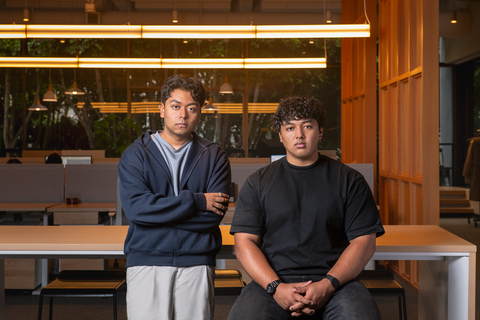
Architect Labs was founded by Ebrahim Hussain and Aaditya Subedi (pictured left to right).
The world needs more chip designs than we can produce today
The rapid growth of AI has fundamentally changed the economics of hardware infrastructure. Computing has shifted from a basic GPU-CPU-memory configuration into massive, scalable, integrated environments built around custom silicon. General-purpose hardware can no longer keep up with AI’s complex demands for specialized compute, advanced networking, and high-speed connections. This trend isn’t just limited to datacenters; it’s expanding into robotics, autonomous systems, spatial computing, defense, personal devices, and wearables.
Yet designing a chip remains one of the most gated efforts in technology: years of development, hundreds of millions in investment, and a shrinking pool of experts concentrated in a few companies.
Architect Labs is building the AI system to design custom chips and full-stack silicon solutions for organizations pushing beyond the limits of off-the-shelf hardware. Architect Labs partners with companies, AI labs, and nations to turn demanding workloads into purpose-built chips, dramatically accelerating the chip development timelines.
Two decades ago, the fabless model let companies design chips without owning a fab. TSMC made world-class manufacturing available to anyone with a chip design. Architect Labs will do the same for design itself: make world-class chip design available to anyone with a workload. The company calls this the designless semiconductor industry, a world where organizations no longer have to become chip companies, make decade-long bets on an architecture, or carry the risk of a failed tape-out just to get the silicon their workload demands.
“AI models have advanced dramatically across nearly every field, yet chip development cycles remain equally slow and painful,” said Ebrahim Hussain, co-founder of Architect Labs. “Unlocking AI-first semiconductor design requires a first-principles rethink of the entire design process, not forcing AI agents into workflows that were never built for them.”
Closing the loop between hardware and AI
Over time, the company plans to extend its partnership and the capabilities of its AI system across the full computing stack, from silicon to co-designing compilers, runtimes, system software, and eventually co-optimizing the AI models themselves. When chip design moves closer to the pace of software, models, architectures, and silicon can be truly co-optimized together. Hardware stops being a constraint that AI must work around and becomes part of the iteration loop itself: a tightening flywheel that accelerates the industry’s path to superintelligence.
“We are just now entering into an era of custom chips for various systems and workload types. To achieve this ideal diversity of AI infrastructure, research labs, software platforms, robotics makers, and cloud operators all need to be able to iterate on novel chip hardware at the same pace and creativity as model development,” said Steve Jang, founder of Kindred Ventures. “Using AI for chip co-design, Architect Labs proposes to deliver on this vision of ultra-low latency, energy-efficient, and affordable intelligence at scale.”
This shift expands access to custom silicon far beyond a small set of companies, enabling more organizations to build specialized hardware infrastructure superior in economics, performance, and power efficiency.
The team
Architect Labs was founded by Ebrahim Hussain and Aaditya Subedi. Hussain skipped high school to enroll in college at 15 and went to work on custom chips at Apple and Tesla. Subedi was an AI researcher at Harvard, working on code verification using AI. The two met at Stanford, where their research focused on building AI systems for chip design and verification. Noticing the gap between the rate of AI progress and underlying hardware, they dropped out of school to start Architect Labs.
The founders have assembled a team of frontier AI researchers, former professors, chip designers, and systems engineers. The team has collectively taped out 80+ production chips, ran $10B+ product lines at Intel’s Data Center Division, taped out one of the first neuromorphic chips at Intel’s AI lab, been core contributors to Meta’s custom silicon, led ML research teams at Anthropic, DeepMind, and xAI, and contributed to core AI research at nearly every frontier lab.
Architect Labs will use the funding to scale its compute infrastructure, deepen its AI research, and co-design production silicon with early industry partners.
About Architect Labs
Architect Labs is building an AI system that designs and verifies chips end-to-end, enabling partners to transform demanding workloads into production-ready silicon while dramatically accelerating development timelines. By making custom silicon more accessible, Architect Labs aims to enable a future where every important workload can run and co-evolve alongside the hardware purpose-built for it. Beginning with chip design and expanding across the broader compute stack, the company is reimagining how computing systems are built for the age of superintelligence. Architect Labs was founded by Ebrahim Hussain and Aaditya Subedi and is based in Palo Alto, California. Learn more at architectlabs.com.
View source version on businesswire.com: https://www.businesswire.com/news/home/20260618895194/en/
Media gallery


